 About
About
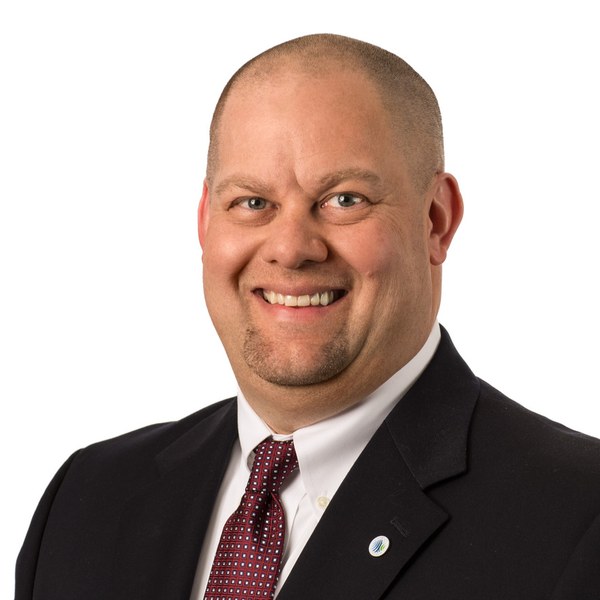
Kevin Hooks
Thirty years bridging the shop floor and the executive suite — starting as an industrial engineer, ending up running digital operations and cybersecurity for a multi-billion-dollar global manufacturer.
About
Thirty years bridging the shop floor and the executive suite — starting as an industrial engineer, ending up running digital operations and cybersecurity for a multi-billion-dollar global manufacturer.
I started my career on the assembly line, not in a server room. My first job out of graduate school was as an industrial engineer on the launch team for a new vehicle platform at a major automotive assembly plant — optimizing material flow and line balancing, not writing code. That background shapes everything I've done since: I've never been the technology executive who has to ask what a changeover is, or why a five-minute line stoppage matters. I've stood on the floor when it happened.
From there, the throughline has been the same: take deep operational understanding of how physical things get made, and pair it with increasingly senior technology leadership to make those operations more connected, more secure, and eventually more intelligent.
The working style behind all of it: prudent risk-taking, clear accountability, and a bias toward action — not analysis paralysis dressed up as strategy.
Long before graduate school, I worked my way through my undergraduate degree at Ohio University at my family's residential construction company — not just as labor, but as an early education in how a business actually runs: scheduling, logistics, cost management, client relationships, workforce coordination. That ground-level view of how an operating business functions has shaped how I approach every operation since, and it's part of why the construction industry isn't an abstraction in the advisory work I do today.
An internship at a chemical processing plant added a fifth industry to what would become a genuinely cross-sector career — process manufacturing works differently than discrete manufacturing, and having stood in both worlds early has been useful ever since.
Began at a large-scale automotive assembly plant as part of a team launching a new vehicle platform — assembly line optimization, line balancing, material flow design, and early exposure to lean manufacturing principles including Just-In-Time delivery and material sequencing. A tool I built here to quantify material-handling labor became a standard system used company-wide.
Moved into a global high-tech electronics manufacturer, progressing from production management through master scheduling into IT. Served on the core team constructing a brand-new manufacturing facility from the ground up — not just supporting the launch, but part of the build itself. Later led warehouse systems design for a newly constructed distribution facility in Ireland, with full responsibility for the system configuration behind it. Along the way, built a changeover-optimization tool that improved production-line efficiency by roughly half, and eventually supported a corporate divestiture and IPO from the systems side — the first of several such transitions across my career.
Took on IT leadership for a large network of North American manufacturing plants at a global consumer packaged goods company, leading a multi-year ERP rollout across a growing number of facilities and managing a distributed team of plant-level IT staff.
Spent the next two decades at a large global automotive supplier, climbing from plant-launch program management through director and ultimately executive-level roles — eventually serving as the de facto regional CIO for a business spanning dozens of countries and hundreds of manufacturing and engineering sites. Introduced the ANSI/ISA-95 model as the company's first standardized framework for mapping manufacturing, quality, and supply chain systems. Built a full industrial cybersecurity program from the ground up, including facilitating cyber tabletop exercises across the leadership team. Sponsored AI initiatives spanning computer-vision quality inspection and AI-driven production scheduling. Along the way, led technology through both directions of the offshoring/reshoring cycle — standing up the company's first Asia regional plant-launch function, and later leading plant technology integration for newly acquired facilities.
After three decades inside large organizations, I've begun building a fractional CIO and industrial IT/OT advisory practice — bringing that same executive-level discipline to mid-market manufacturers, industrial operators, and construction businesses that need the capability without the full-time overhead.
A recurring theme across this career, easy to miss in a role-by-role list: I've been on the systems side of seven distinct M&A, divestiture, and IPO transactions — not as a spectator, but as the person responsible for the technology actually working through the transition. That's a different skill than steady-state IT leadership, and it's the foundation of the M&A and Offshoring/Reshoring services now part of the advisory practice.
Cut shop-floor cyber-recovery time from days to under 4 hours through a purpose-built incident-response playbook and recurring, facilitated cyber tabletop exercises.
Deployed AI-based production scheduling across a multi-plant footprint, generating well over $10M in savings since inception.
Led modernization across a large multi-site data-center footprint, including plant-level and micro data center design, achieving 99.99% high-availability uptime.
Managed roughly $250M in plant technology recapitalization spend over the past 15 years — infrastructure and systems investment across new launches, plant upgrades, and equipment refresh cycles.
Directed an intrusion-prevention and virtual-patching rollout across dozens of plants in a single week.
Developed multiple direct reports into director-level roles; repeatedly recognized in the top percentile for both leader effectiveness and employee engagement.
"Become a conduit for helping to demystify IT for operations leadership."
— A stated goal from that same 2011 leadership-development project on building manufacturing IT metrics
Ohio University — Stocker Fellowship recipient (Operations Research). Thesis: "Enhancing quality inspection through the integration of quality control and computer aided design: A framework."
Ohio University — Graduated Summa Cum Laude, Tau Beta Pi engineering honor society. Self-funded in part through work at the family construction business.
University of Wisconsin–Milwaukee — company-sponsored executive leadership program with an applied capstone project on manufacturing IT metrics.
Change advisory board (CAB) governance and IT service management fluency.
Published peer-reviewed work on artificial neural networks and expert systems for quality inspection in the early 1990s — roughly three decades before AI in manufacturing became a mainstream conversation.
Let's talk about how this background applies to what you're working on.
Get in Touch